For decades, buying a suppressor or owning a short-barreled rifle meant dealing with the National Firearms Act, ATF paperwork, federal registration, and — most famously — the $200 tax stamp.
In 2026, that landscape changed dramatically.
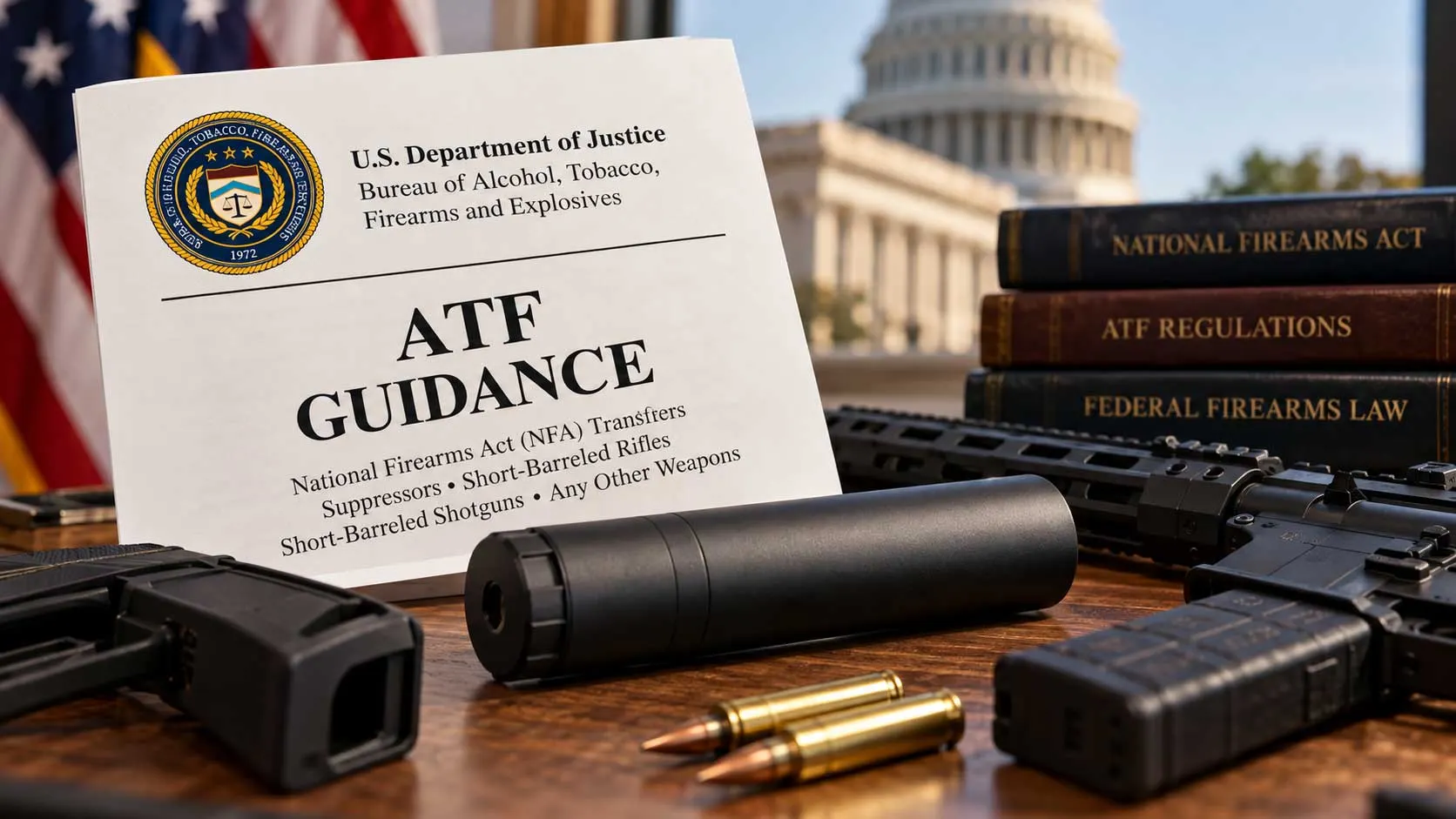
Congress reduced the federal making and transfer tax to $0 for suppressors, short-barreled rifles, short-barreled shotguns, and certain “any other weapons.” Then, on October 9, 2026, the Bureau of Alcohol, Tobacco, Firearms and Explosives announced that it would no longer enforce several traditional NFA requirements for those covered items, including prior approval, registration, and tax-stamp requirements.
So does that mean the NFA is gone?
Not exactly.
For Texas gun owners, the situation is much better understood as a major change in how parts of the NFA are currently being enforced — not the complete disappearance of federal firearms law.
Do I Need a Tax Stamp for a Suppressor in Texas in 2026?
If you are searching “do I need a tax stamp for a suppressor”, the answer has changed.
Under current federal law, the transfer tax for most NFA firearms other than machine guns and destructive devices is now $0. That includes suppressors, short-barreled rifles, short-barreled shotguns, and certain AOWs.
ATF’s October 2026 guidance goes further. The agency says it will not enforce the requirements for individuals to obtain prior ATF approval before making or transferring those covered items, and it will not enforce the traditional NFA registration and tax-stamp requirements for them.
That is a major departure from the process gun owners knew for generations.
But it is important to understand what has changed — and what has not.
Is Form 4 Gone in Texas?
For people searching “Form 4 Texas”, the traditional Form 4 process is no longer being enforced by ATF in the same way for covered suppressors, SBRs, SBSs, and AOWs.
We covered ATF’s original announcement in more detail in ATF Issues New Guidance on Form 4, NFA Items, Suppressors, SBRs, and What It Means in Texas.
Historically, a customer buying a suppressor from a dealer would generally:
- Purchase the suppressor.
- Submit ATF Form 4.
- Pay the $200 transfer tax.
- Submit fingerprints and photographs.
- Wait for ATF approval.
- Take possession only after approval.
Under ATF’s current guidance, the agency says it will not require that prior NFA approval before covered items are transferred.
That does not mean a suppressor can simply be sold with no federal paperwork.
Suppressors remain firearms under the federal Gun Control Act. A licensed dealer still has to comply with normal federal firearm-transfer requirements, including ATF Form 4473, the applicable NICS background check, dealer recordkeeping, and prohibited-person restrictions.
So the best way to think about the new process is this:
The traditional NFA approval layer has changed, but the ordinary federal firearm-transfer rules have not disappeared.
What Are the ATF Suppressor Rules in 2026?
Anyone searching “ATF suppressor rules 2026” is likely finding a lot of conflicting information.
Here is the basic picture as of October 2026:
ATF says it will not enforce prior NFA approval, registration, tax-stamp, or related requirements for:
- Suppressors / silencers
- Short-barreled rifles
- Short-barreled shotguns
- Certain “any other weapons”
The $200 NFA transfer tax remains for machine guns and destructive devices.
ATF also makes clear that its guidance does not override state or local restrictions.
That last point matters because firearms law is not identical in every state.
What Do Suppressor Laws in Texas Look Like in 2026?
For people searching “suppressor laws Texas 2026”, Texas is especially interesting.
Texas law has been relatively favorable toward suppressors for years. State law defines firearm suppressors and includes specific provisions dealing with suppressors manufactured in Texas and remaining in Texas.
Texas law also limits the ability of state and local government entities to enforce certain federal firearm-suppressor regulations that do not exist under Texas law.
However, the fact that Texas has its own suppressor statutes does not mean gun owners should ignore federal law.
The safest approach is to separate the questions:
- Is the item legal under Texas law?
- Is it legal under current federal law?
- What federal transfer rules still apply?
- Does the dealer have additional compliance obligations?
- Are there interstate transportation issues?
The October ATF guidance significantly changes the federal NFA side of the equation, but ordinary federal firearm laws still matter.
Are Short-Barreled Rifles Legal in Texas?
Another growing search is “SBR laws Texas” or “short barreled rifle Texas.”
A short-barreled rifle generally refers to a rifle with a barrel shorter than the federal statutory minimum or a firearm configured in a way that falls within the federal SBR definition.
Historically, making or acquiring an SBR required NFA registration and approval.
Under ATF’s October 2026 guidance, the agency says it will no longer enforce those NFA making, transfer, registration, and tax-stamp requirements for covered SBRs.
That does not mean every rifle configuration is automatically lawful.
Federal Gun Control Act restrictions still exist, prohibited-person laws still apply, and ATF says interstate transportation requirements may still apply to short-barreled rifles and short-barreled shotguns.
So before changing barrel length, installing a shoulder stock, or changing the configuration of a firearm, it is still wise to verify how current federal and state law apply.
Can I Put a Collapsing Stock on a Short-Barreled Firearm?
This is another area where social media often creates confusion.
A collapsing or adjustable stock is not automatically illegal.
What matters is the firearm’s overall configuration.
Questions may include:
- Was the firearm originally manufactured as a rifle?
- What is the barrel length?
- Is the firearm designed to be fired from the shoulder?
- Does the configuration meet the definition of a short-barreled rifle?
- Are any other federal or state restrictions involved?
The new ATF guidance affects NFA enforcement, but it does not mean firearm definitions have disappeared.
If you are unsure about a particular configuration, it is better to ask before modifying the firearm.
What Happens to Suppressors That Are Already Registered?
If you already own a registered suppressor, SBR, or other covered NFA item, the new guidance does not mean your registration suddenly disappears.
ATF has indicated that it will continue accepting voluntary NFA submissions.
Some firearm owners may prefer to maintain existing registration records, particularly because the legal landscape could continue to change.
That leads to one of the biggest unanswered practical questions surrounding the new policy.
Is the NFA Actually Repealed?
No.
This distinction is extremely important.
Congress reduced the federal making and transfer taxes to $0 for several NFA categories, and ATF has announced that it will not enforce certain approval, registration, and tax-stamp requirements for those items.
But that is not the same thing as Congress repealing the National Firearms Act.
The statute still exists.
ATF itself notes that circumstances could change in the future. Because there is generally no automatic mechanism for registering an already-unregistered NFA firearm later, gun owners should understand that today’s enforcement environment does not necessarily guarantee what federal policy will look like years from now.
That is one reason some owners may want to discuss voluntary registration with a qualified firearms attorney.
What Does This Mean If I Want to Buy a Suppressor in Greenville, Texas?
If you are searching “buy suppressor Greenville TX” or “suppressor dealer Greenville Texas,” the process may now be significantly easier than it was in previous years.
A buyer working with a licensed dealer should still expect normal federal firearm-transfer requirements, including identification, Form 4473, and the appropriate background check.
The key difference is that the traditional federal NFA transfer process may no longer delay possession in the way it once did for covered suppressors.
Because the rules have changed quickly, it is worth working with a dealer who is staying current with ATF guidance rather than relying on information from several years ago.
Does This Make Suppressors More Accessible?
Almost certainly.
The old system created two major barriers:
- A $200 federal tax
- A separate NFA approval process
Both were enough to discourage many otherwise lawful buyers.
With the transfer tax now at $0 and ATF no longer enforcing prior NFA approval for covered suppressors, suppressors may increasingly become a normal part of recreational shooting, hunting, and range use.
That may also mean more first-time buyers asking questions about:
- Caliber compatibility
- Direct-thread versus quick-detach mounting
- Rifle versus pistol suppressors
- Rimfire suppressors
- Multi-caliber suppressors
- Barrel-length restrictions
- Suppressor maintenance and repair
- Host firearm compatibility
Choosing the right suppressor is still about much more than simply buying the first one available.
What Texas Gun Owners Should Remember
The biggest takeaway is simple:
The $200 tax stamp may be gone for many NFA firearms, but the NFA itself has not simply vanished.
ATF has changed how it is enforcing major portions of the law for suppressors, SBRs, SBSs, and AOWs. At the same time, regular federal firearm laws, dealer requirements, prohibited-person restrictions, Texas law, and certain transportation rules continue to exist.
And because the legal landscape is still developing, gun owners should be cautious about relying on old information — or oversimplified social media posts.
Have Questions About Suppressors or SBRs in Texas?
Have questions about purchasing a suppressor, an SBR, or how the new transfer process works?
Talk with County Armory in Greenville, Texas.
Whether you are looking for a suppressor, firearm transfer, custom rifle build, gunsmithing service, or simply need help understanding the current process, our goal is to help customers make informed decisions and navigate firearm purchases responsibly.
County Armory — Greenville, Texas
Quality Firearms. Expert Service. Trusted Local.
This article is provided for general informational purposes and is not legal advice. Firearm laws and agency guidance can change. Always verify current federal, Texas, and local requirements before making, modifying, possessing, transporting, or transferring a regulated firearm.
Sources and Further Reading
- ATF. “ATF Issues Guidance on National Firearms Act Transfers for Short-Barreled Rifles, Short-Barreled Shotguns, Suppressors and Certain Other Firearms.” October 9, 2026 guidance stating ATF will not enforce prior approval, registration, tax-stamp, and related NFA requirements for suppressors, SBRs, SBSs, and certain AOWs. Read the ATF press release
- ATF. “Update to NFA Transfer Guidance.” Read the ATF guidance
- 27 CFR § 479.82, “Transfer tax rate.” Lists the transfer tax at $0 for NFA firearms other than machine guns and destructive devices, which remain subject to a $200 transfer tax. Read the regulation on eCFR
- Texas Government Code, Chapter 2, “Firearm Suppressor Regulation.” Includes provisions on Texas-manufactured suppressors and limits on certain state and local enforcement of federal firearms laws. Read the statute on Texas Legislature Online